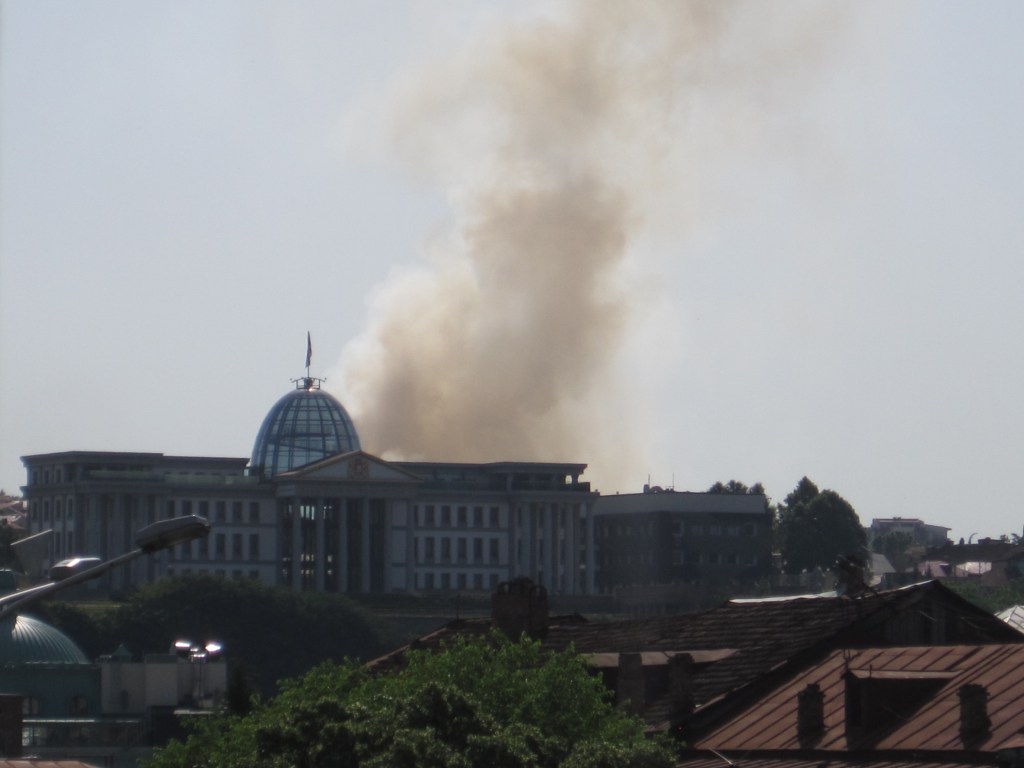
I stayed in Tbilisi just long enough to do some laundry and get a night of sleep. The next morning, the kitchen window of Pushkin 10 Hostel provided a picturesque view of something large on fire just behind the presidential palace. I tried not to take it as an omen.
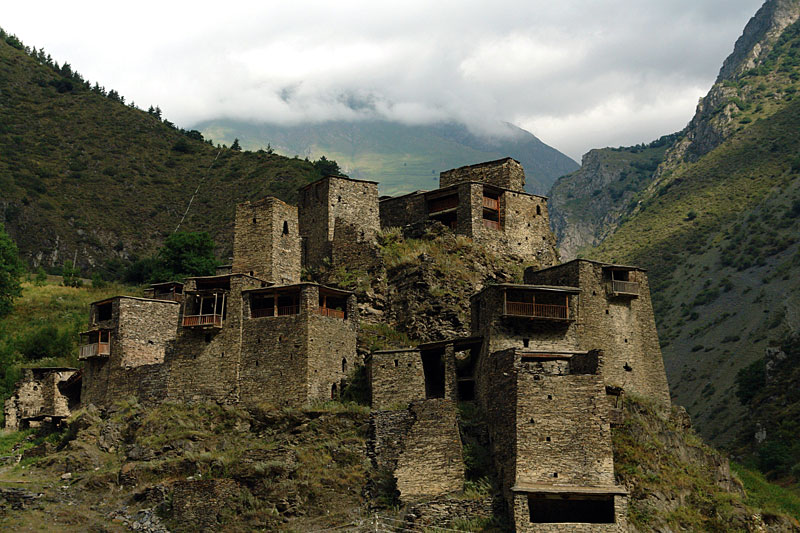
My goal for the day was to reach the fortress village of Shatili, high in the mountains of Khevsureti, right up against the Chechen border. There are many romantic legends about this remote region and the highlanders who live there. Allegedly, during WW1 a group of Khevsur highlanders arrived in Tbilisi to serve in the army wearing ancestral chain mail hauberks and carrying swords.
Since Khevsureti is not well served by public transit, I had hired Giorgi Gortamashvili, who runs Private Tour Georgia, to be my guide for the next few days. This proved to be a wise decision, as you will see.
Giorgi picked me up after breakfast with a jeep, and we set off on the five-hour drive into the highlands. First, however, we needed to buy some provisions, because even produce trucks don’t always make it to Khevsureti and it’s best to bring some fresh food of your own. We got wine at a new-looking mall on the edge of Tbilisi and picked up tomatoes and cucumbers from a shop in Zhinvali, a town of blocky concrete apartment buildings along the highway north. From there, we continued up the eastern shore of the Zhinvali reservoir and alongside the Aragvi river into the region known as Pshavi.
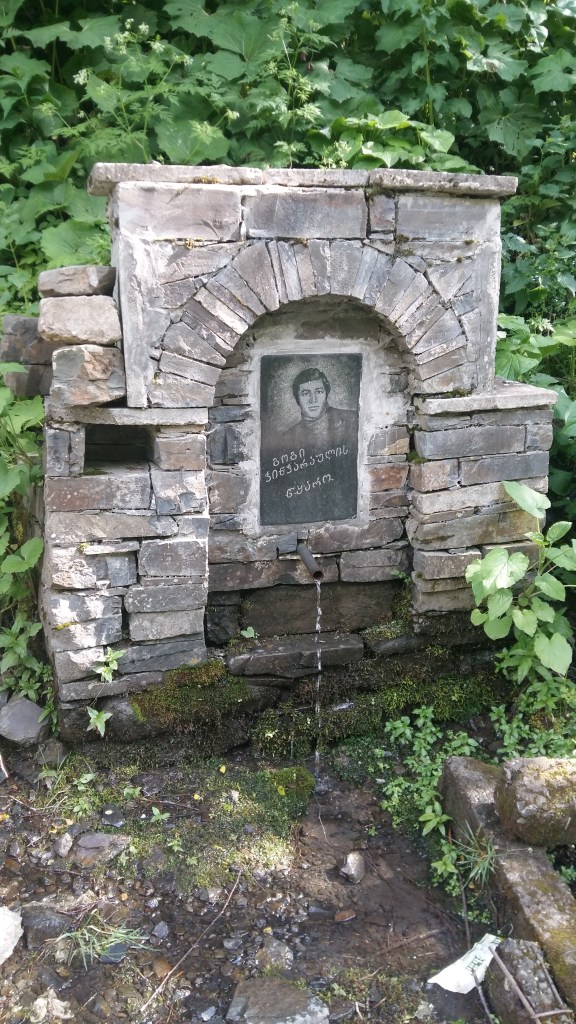
Along the way, Giorgi expounded on the lore of the region. He is a native Pshav and he has a PhD in Georgian folklore, which makes him a treasury of knowledge. He’s particularly fond of the poet Vazha Pshavela, who was also from Pshavi. I was glad I’d read the epic poem “Host and Guest” so I had some material to talk with him about. (You can find an English translation of it here.)
After a lunch stop for khinkali dumplings at a roadside cafe (where I successfully survived my first encounter with a squat toilet), we continued north into Khevsureti. The road still ran alongside the Aragvi, which was brown with rushing water from storms somewhere upstream. The pavement gave out, and then the gravel road soon acquired big potholes. Giorgi explained that the road to Shatili was being widened, but the company that was doing it first removed all the hardtop. Then their heavy machinery turned it into mud holes, sharp rock beds and other hazards.
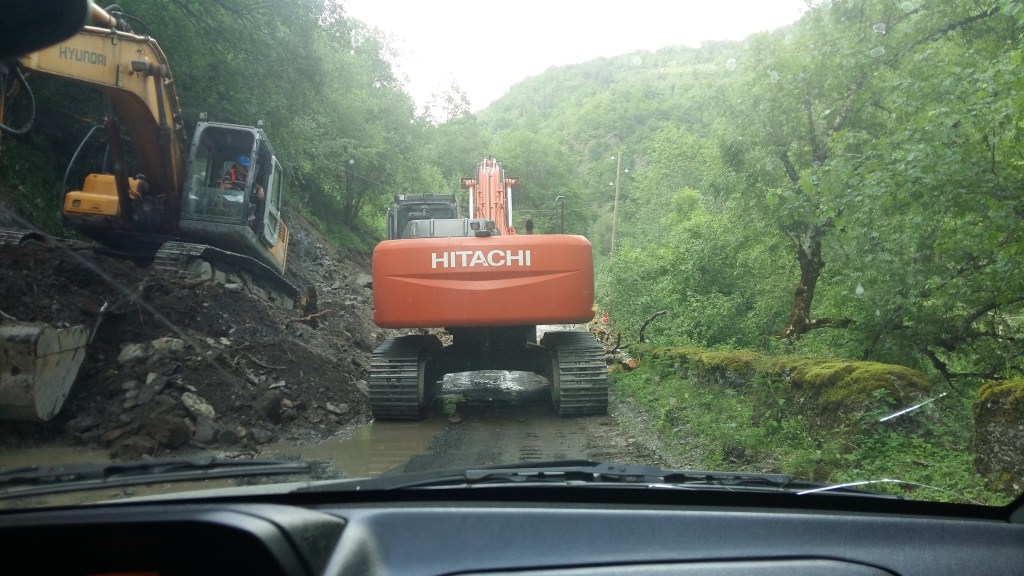
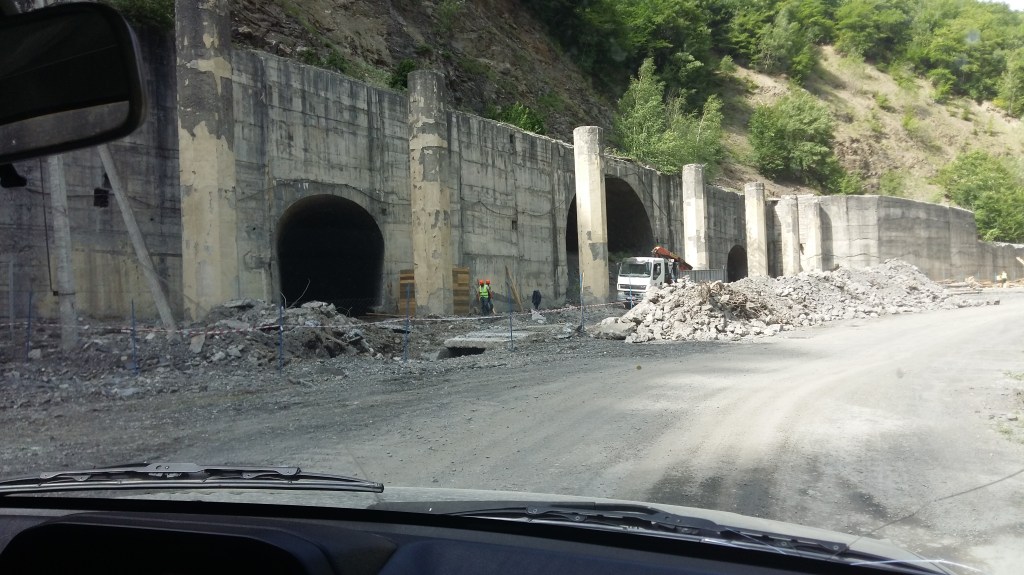
Soon the road was more like a logging road. When it crossed from one side of the river to the other, there were big holes in the ends of the bridges where the riverbanks had eroded away. As we wound up the mountains towards the Datvisjvari Pass, our trail could barely be described as a logging road anymore. Creeks rushed down the slopes and cut into the gravel edge until it was barely wide enough for the jeep’s tires.
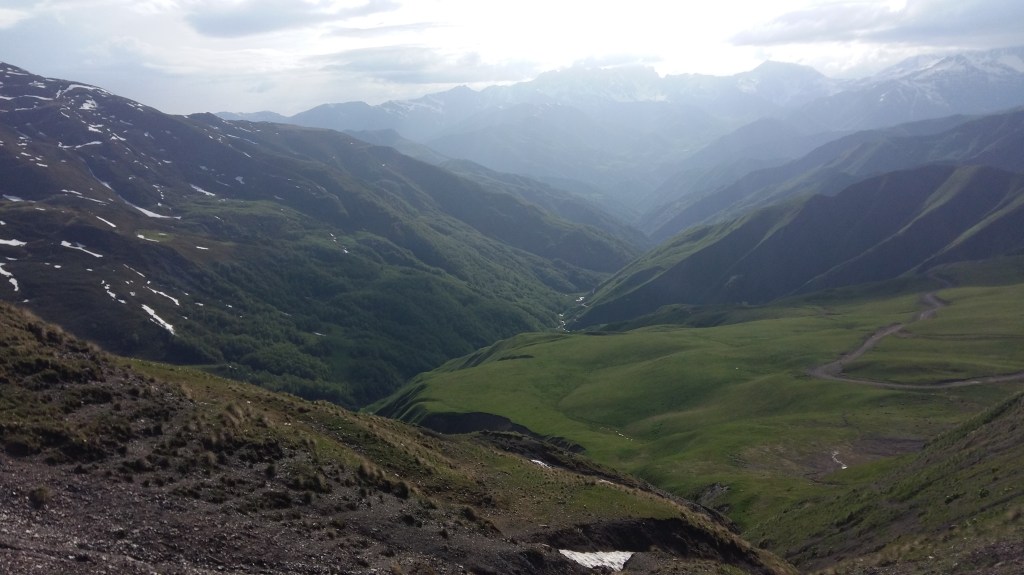
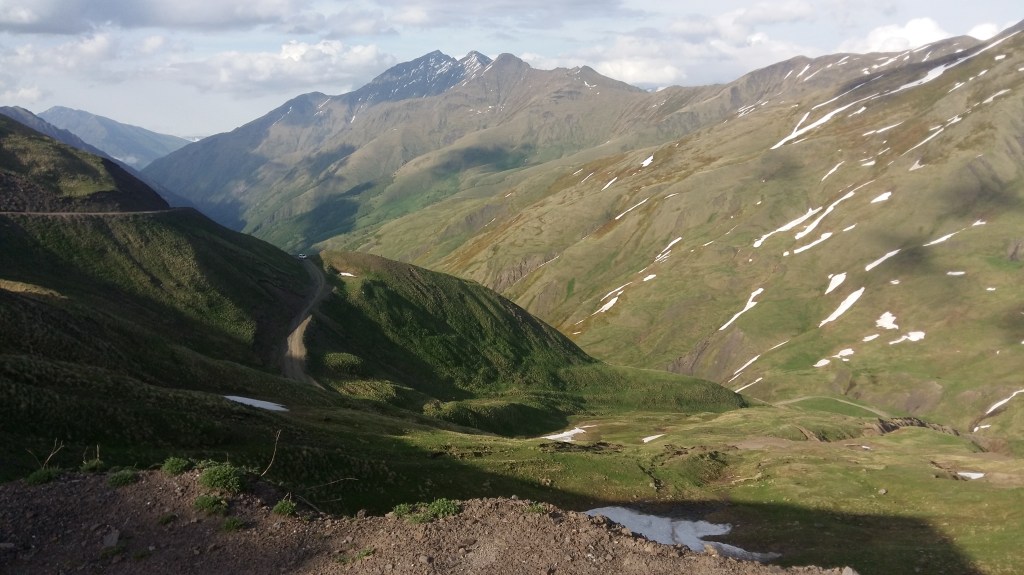
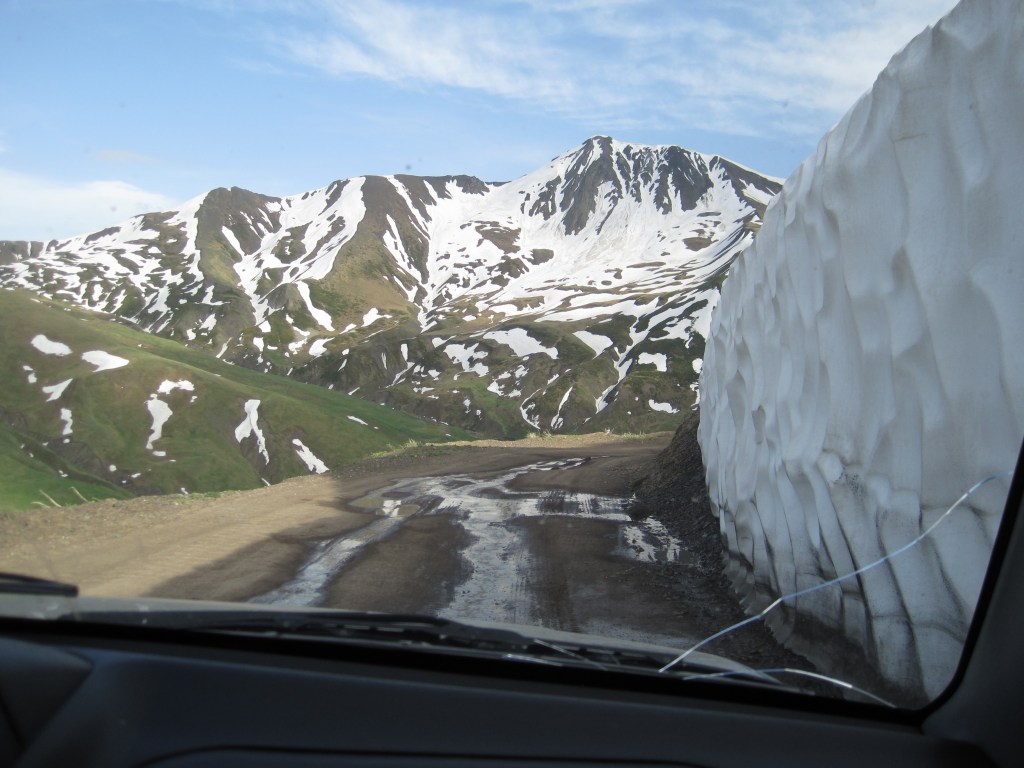
We were now on the north side of the Greater Caucasus range. Giorgi observed that many of the place names in this region have Chechen rather than Georgian roots. Kistani, for instance, was clearly once the home of some Kists. The toponyms remain, even though the populations changed over time.
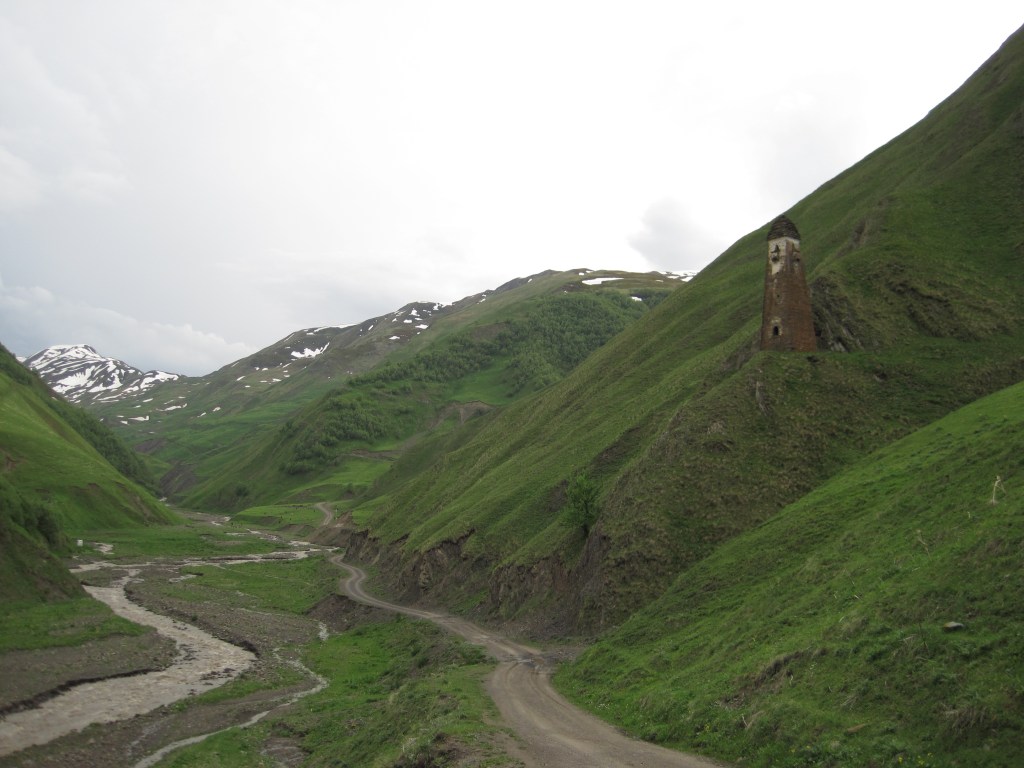
As we descended through the Arghuni gorge, the scenery became heartbreakingly beautiful, like something drawn to illustrate The Lord of the Rings. However, when we were within 10 km of Shatili, we ran into a problem. We rounded a corner and discovered a backup of five or six cars. The Arghuni River had completely washed out a section of road. On the far side of the rushing water, some workmen sadly contemplated their broken down bulldozer. The rock walls all around had prevented anyone from calling the other bulldozers and excavators we had passed on the road.
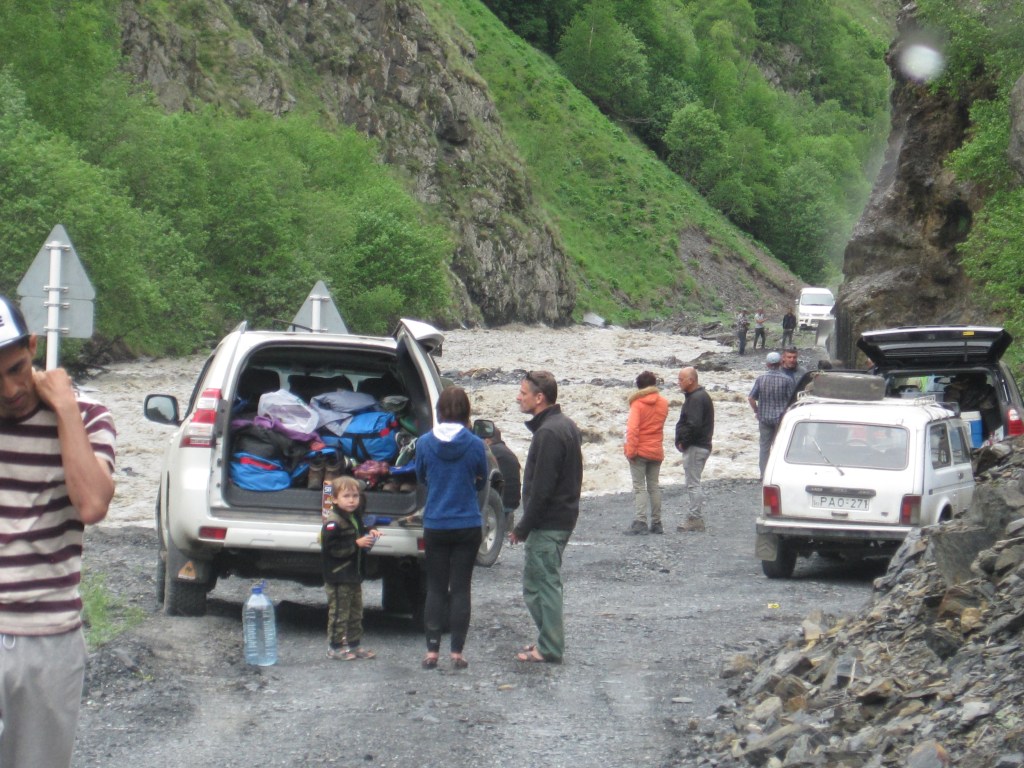
This is where I was really glad I’d hired a guide. Giorgi quickly assessed the situation and determined that it was time for Plan B. The road wasn’t going to open any time soon. So we turned around and headed back over the pass with twilight setting in. Once we got to a place with cell phone reception, Giorgi made some calls and found us a guest house for the night in the village of Roshka, up a steep sideroad. By now it was fully dark and a thunderstorm was coming. To the right of the narrow road, there was just a black void, in which the peaks on the opposite side of the gorge were occasionally silhouetted by lightning.
We pulled up in a farmyard and were shown into a kind of chalet. It was spartan, but clean and equipped with toilets and a refrigerator. Our hosts were giant men, a father and son who planted their feet wide and spoke in formal, extended declamations. We had a late supper of the tomatoes and cucumbers we had brought, plus cold fried eggs, white cheese and bread supplied by our hosts. I couldn’t follow most of the conversation, but at one point Giorgi mentioned that I had read Pshavela’s “Host and Guest”. Our host brightened. Through Giorgi’s translation, he said “You should read ‘The Snake Eater’ too! I’m happy to say that I have since found a translation.
And that is how I almost, but not quite, went to Shatili.

 Kartvelian Adventures
Great post 🙂
LikeLike