The next morning, after my visit to the library, I went horseback riding in the mountains above Pankisi. This tour too had been arranged by my hostess, Nazy. My guide was Avto, an affable local man. He came to the guesthouse gate with two horses, which I was happy to see were healthy looking and recently shod.
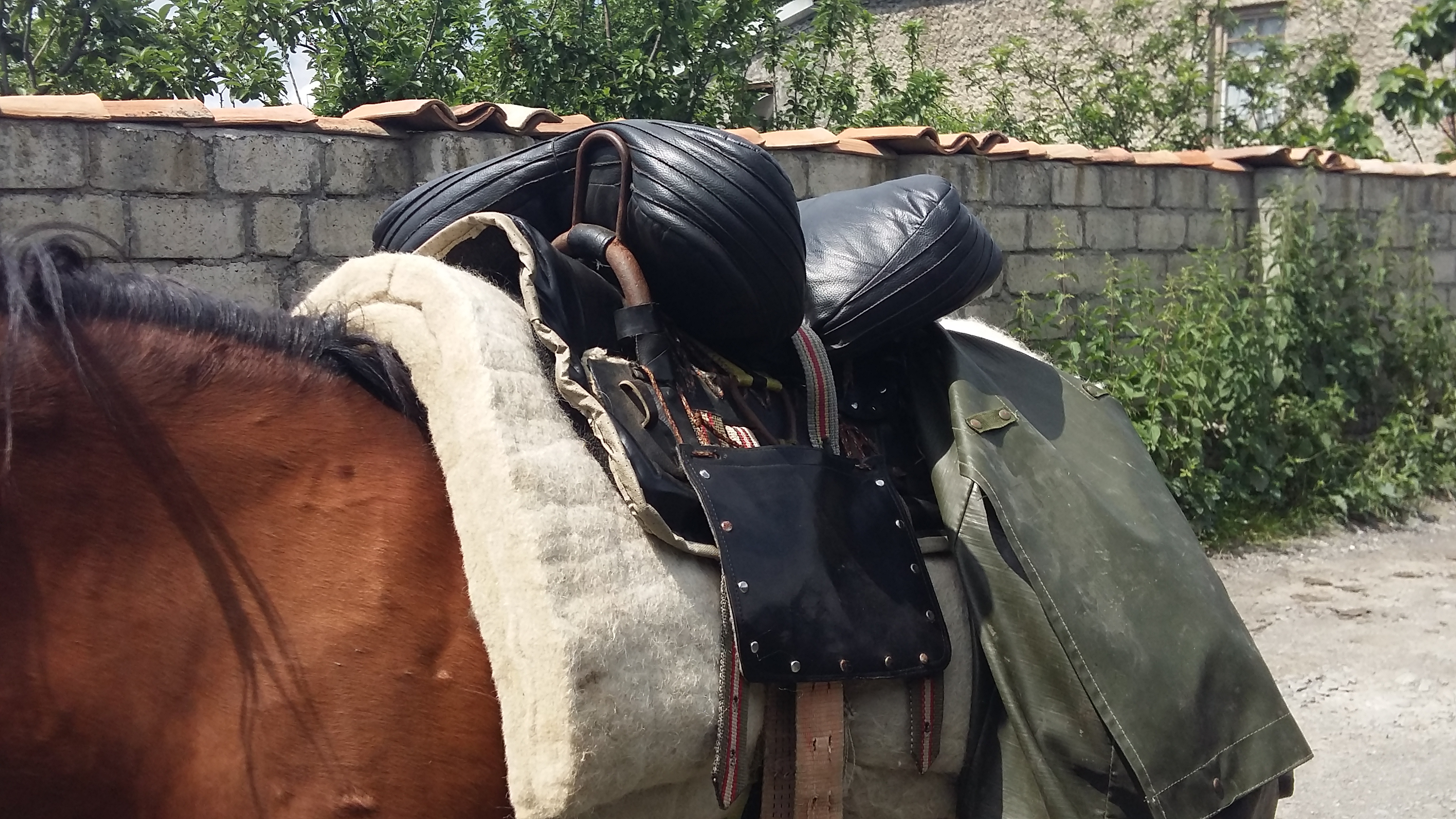
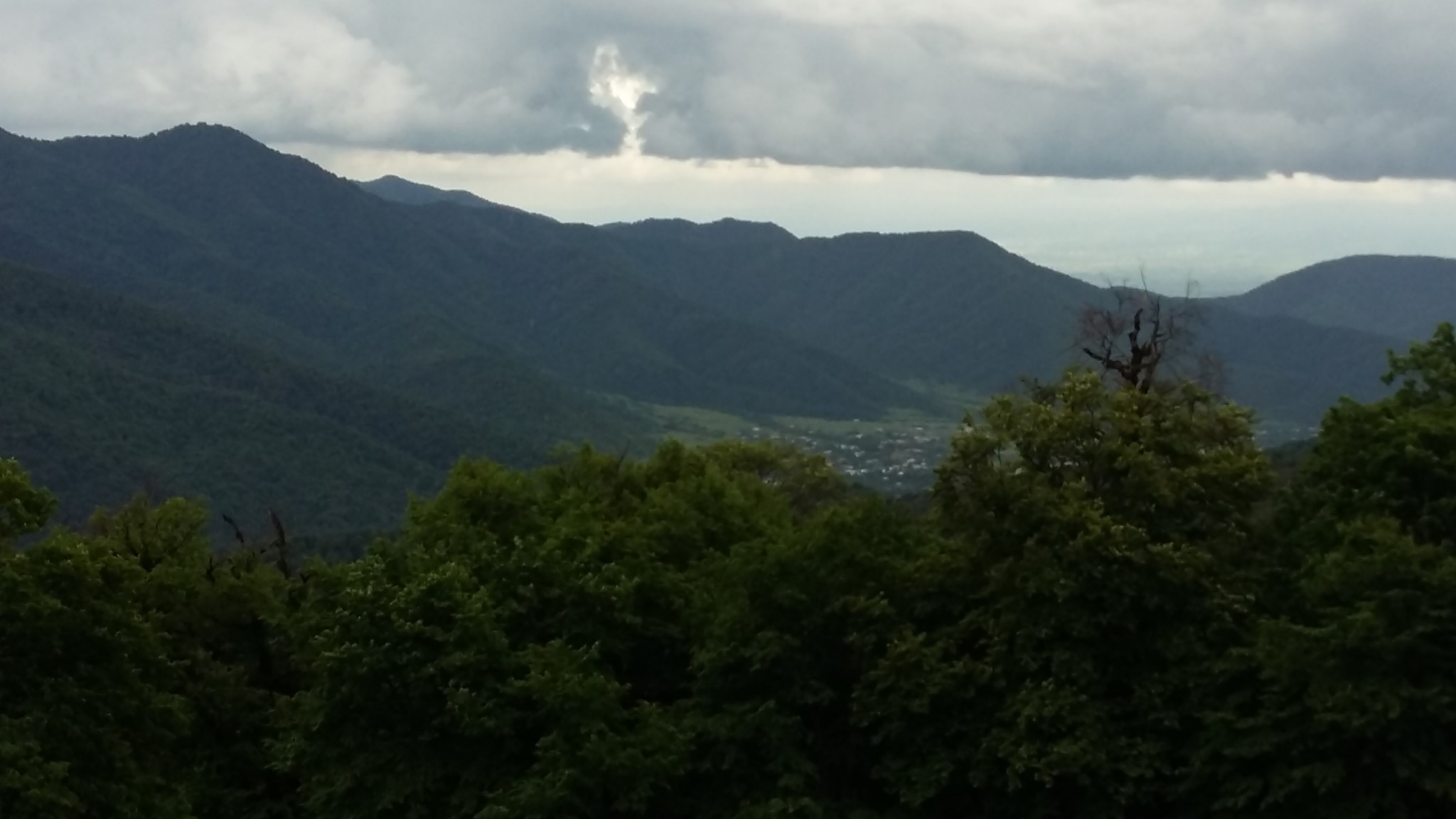
Our trail started in the wide pasture lands beside the Alazani River, and struck upwards into the mountain forests when it reached the head of the valley. We traversed groves of ancient, gnarled beeches, and passed the entrance to the Batsara Nature Reserve, home of an unusual stand of old growth yews. Unfortunately, we weren’t able to go in, as the reserve doesn’t allow horses. That will be an expedition for a future vacation.
Along the way, we found some stray cattle in the woods and drove them up to a higher pasture, presumably to keep them out of the nature reserve. The equivalent of “Git along!” in the Kist language is apparently simply to roar GRAWR!
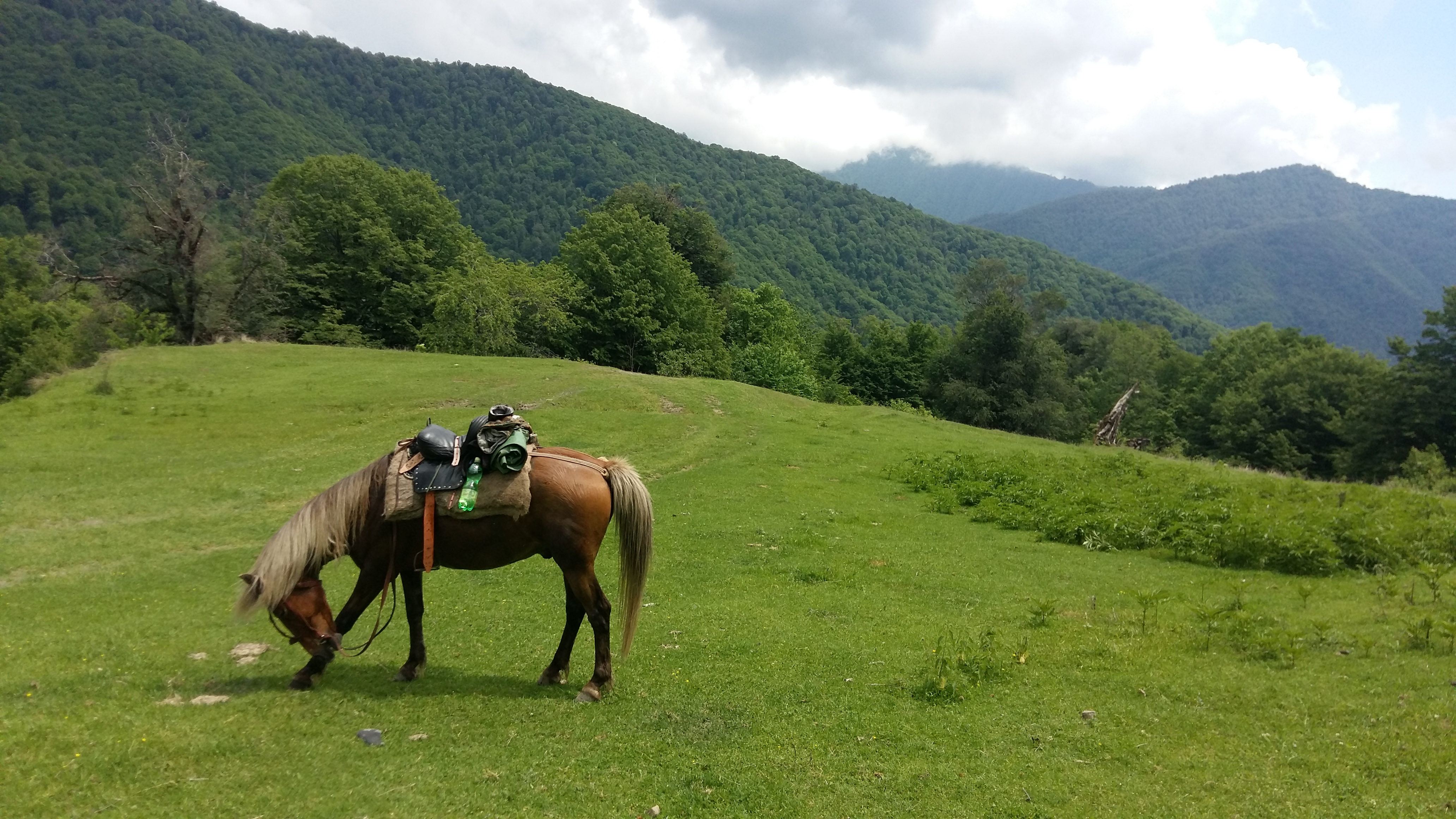
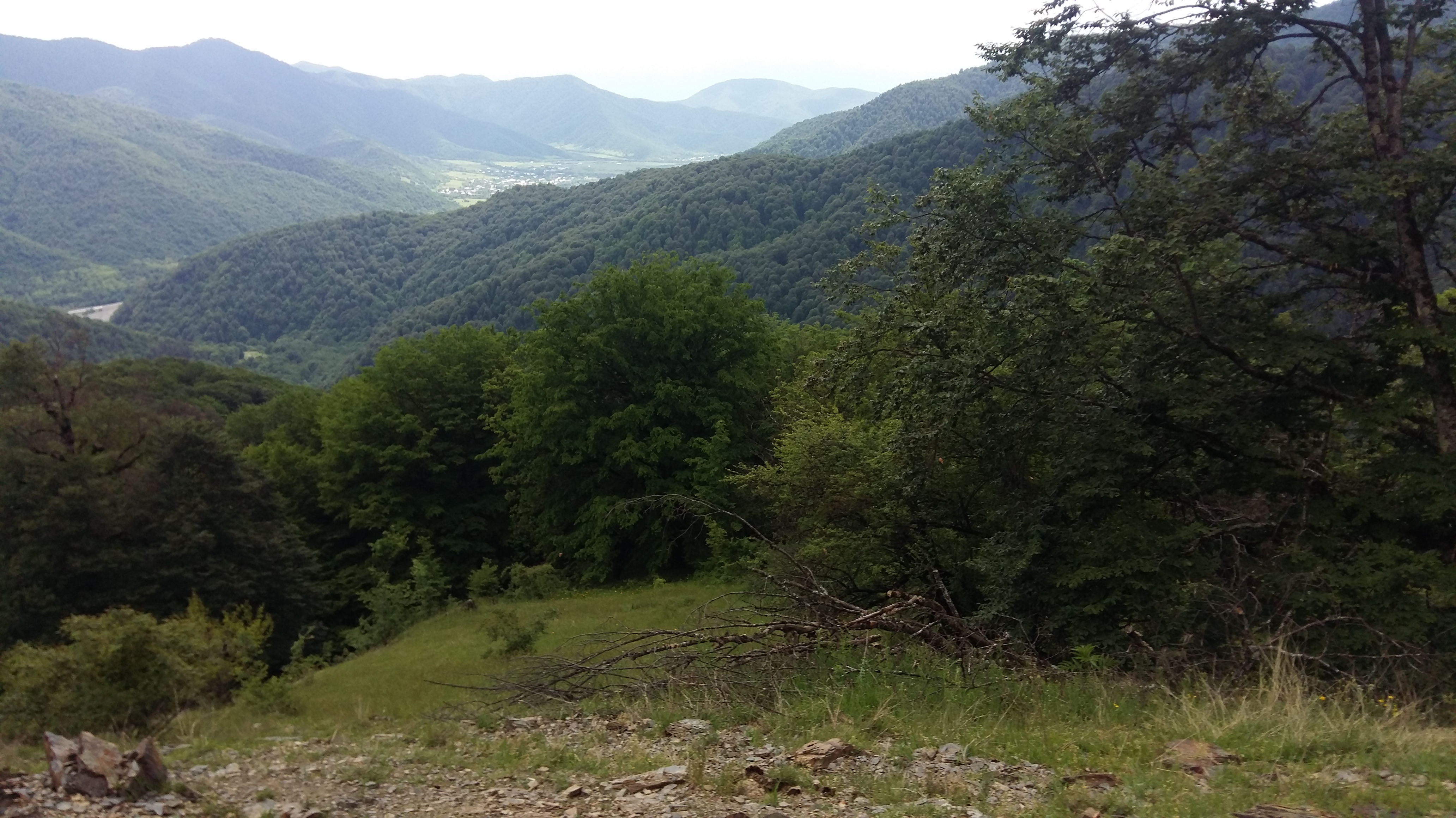
We were making for the high pastures at Tbatana, but we had left late in the morning because of my visit to the library. Back at the guesthouse earlier, when I had Nazy to translate, I made sure Avto knew it was okay if we didn’t make it all the way.
As it transpired, a cloudburst farther up the trail dropped twenty minutes of hail on us, though it had been hot and sunny in the valley. We dismounted and hunkered down in the bush under our rain gear until it passed. Now I understand the utility of a nabadi, the thick cloak of black felt that is part of the traditional folk clothing of these regions. One of those would have been really handy!
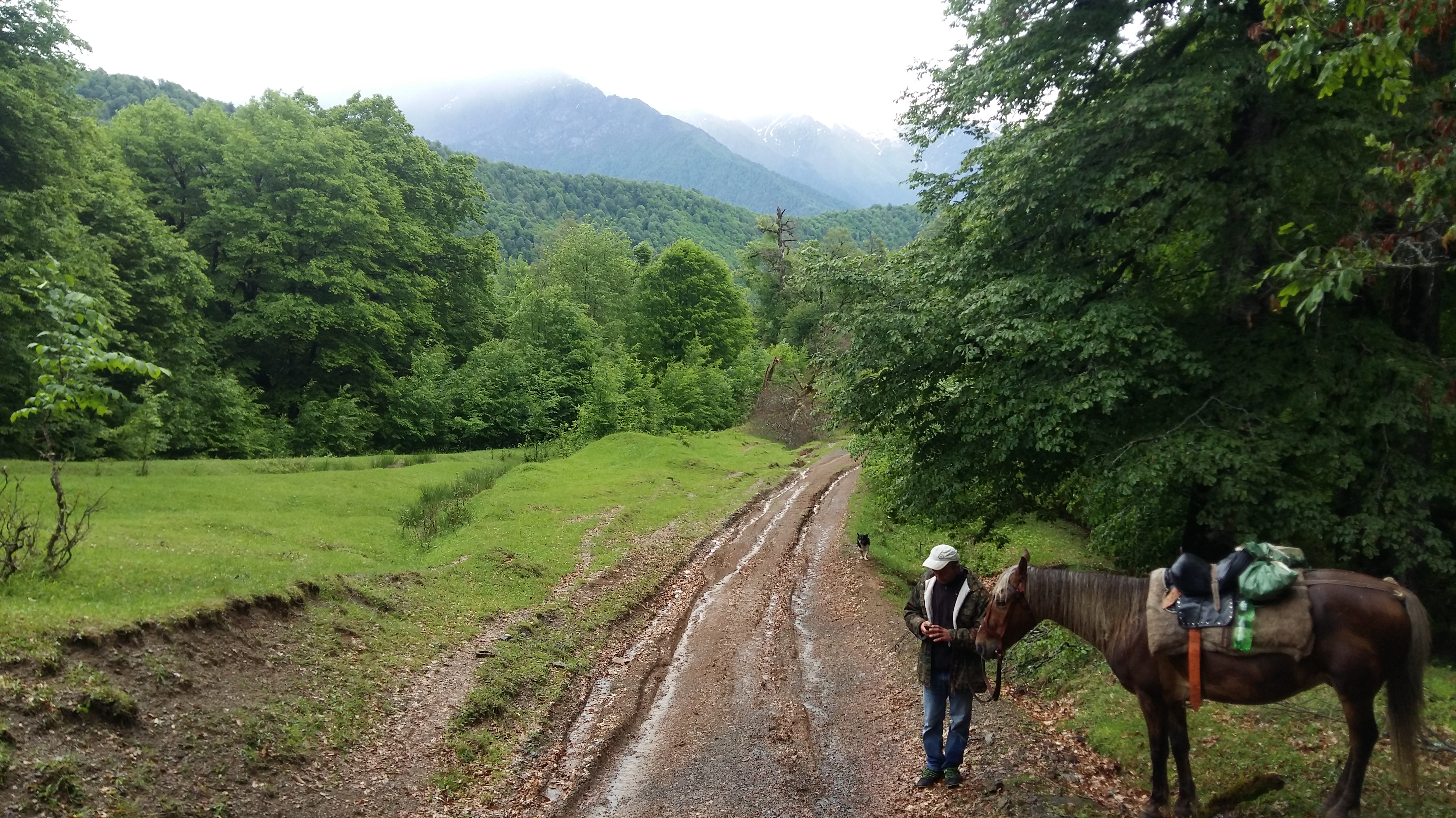
On the way back, we passed again through the riverside pastures at the top of the valley. There are plans afoot to construct a hydroelectric dam, but the local people fear it will dry out these pastures without compensating the people who use them. A month before I showed up, the company in charge of the project tried to start construction before the community consultations had occurred, and the situation escalated fast before the company backed off.
When I rode through the proposed dam site, there was no new construction activity to be seen, but a big yellow police bus was parked by the river, guarded by one officer. The village sheepdogs were using it as a shade canopy. The day before, I’d seen the same bus, full of uniformed security police, roar through Jokolo and slalom around the cattle standing in the road. Apparently the government in Tbilisi has money to use busloads of cops as security guards at a private construction site, but there are no funds for library books.
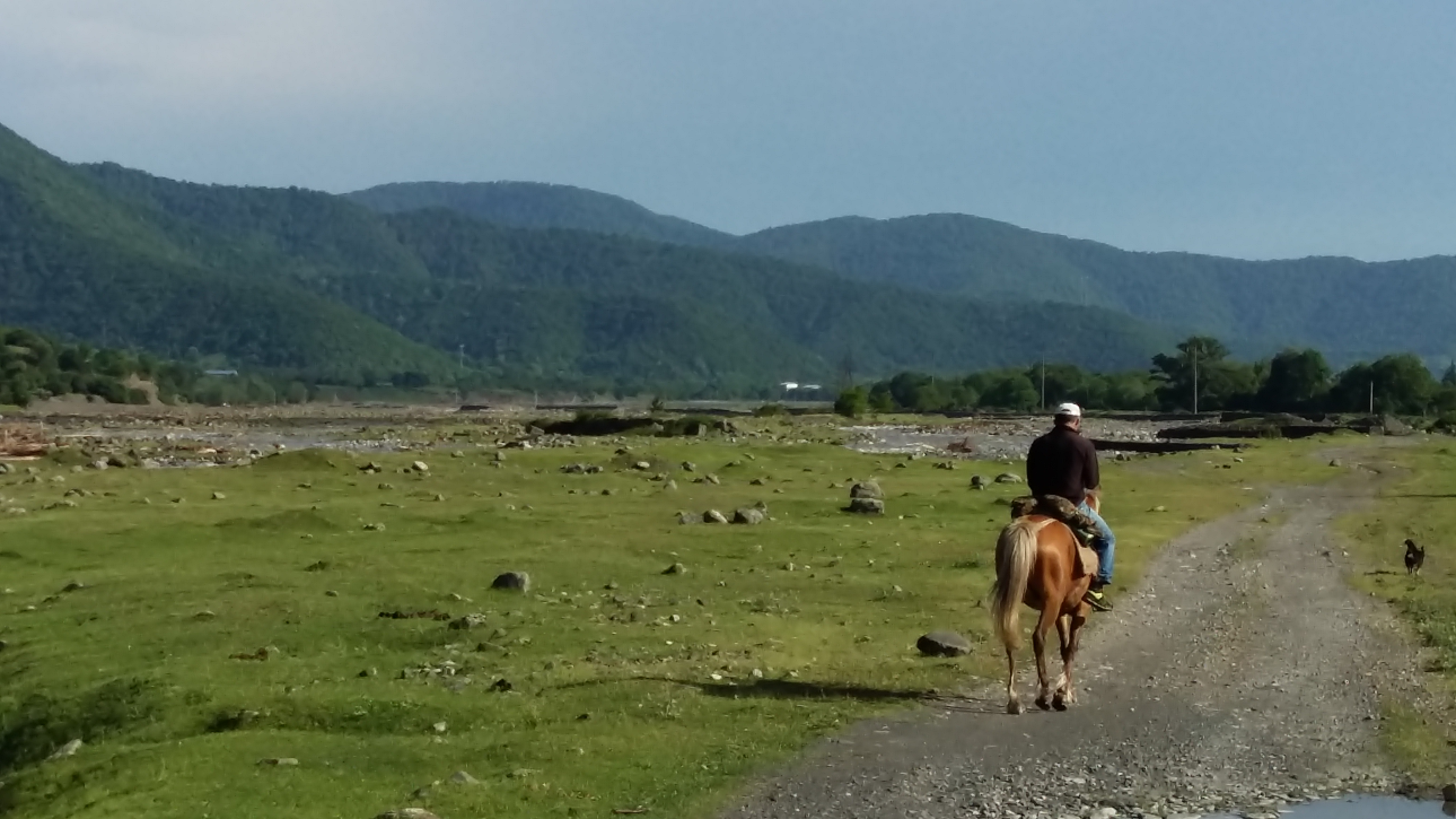
The ride itself was an excellent outing. My horse Boyan, despite her warlike name, was an unflappable trail veteran who could be trusted to make wise decisions while I was distracted by the scenery. Avto also showed me pictures of longer, multiple-day rides he guides for groups in the summertime. You can go all the way to Tusheti on horseback. Dreams for future trips.

 Kartvelian Adventures
Great post 🙂
LikeLike