The next morning, I paid a visit to the local municipal building in Jokolo, which houses the Pankisi Valley’s only library. I was inspired by this article about Nana “The Book Soldier” Mutoshvili, the librarian who kept it open through all the crises of the early aughties in Pankisi, and more recently fought a whole different kind of battle with budget-slashing bureaucrats who wanted to shut it down.* Seriously, this woman belongs in the pantheon of hardcore public librarians.
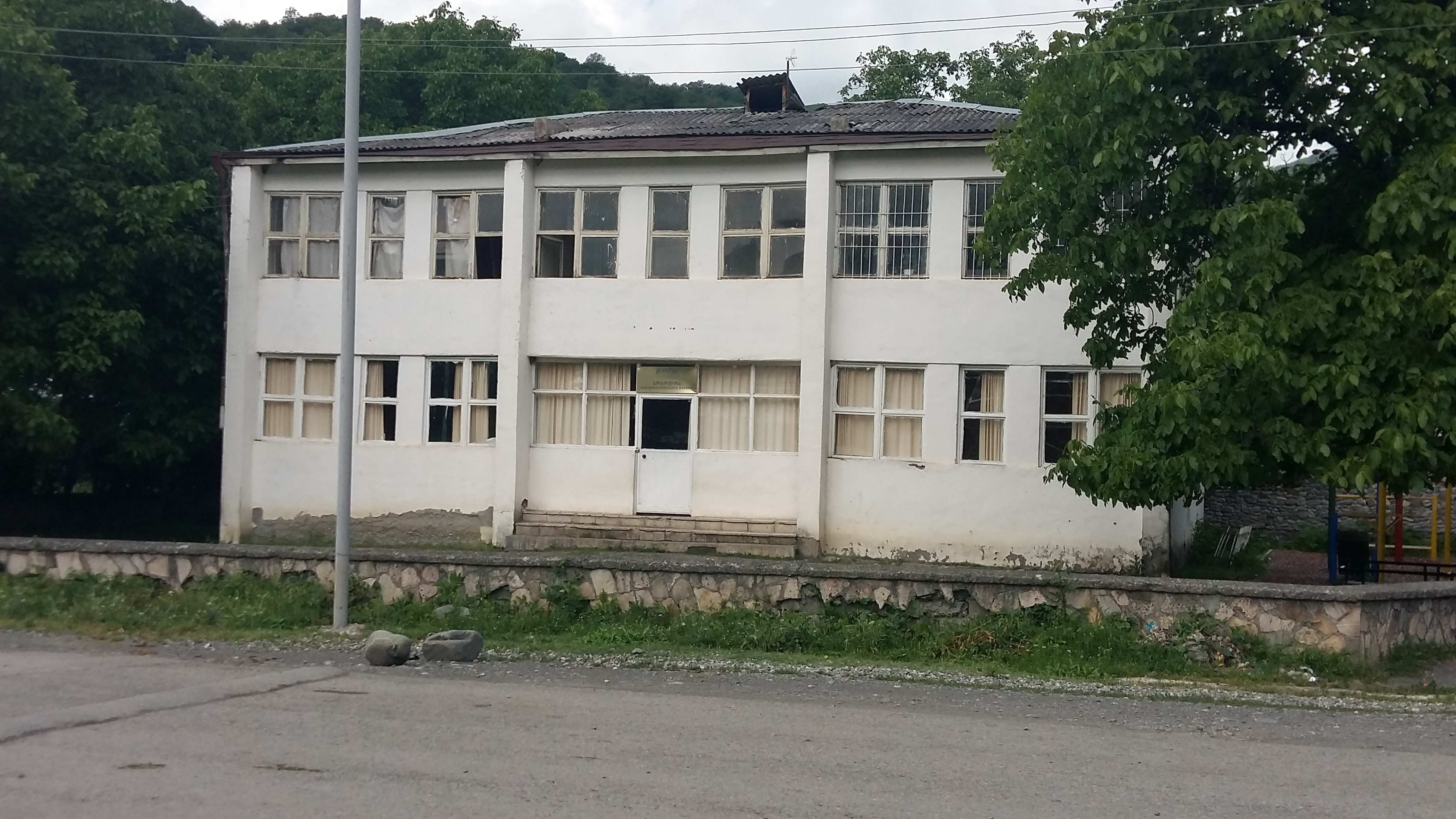
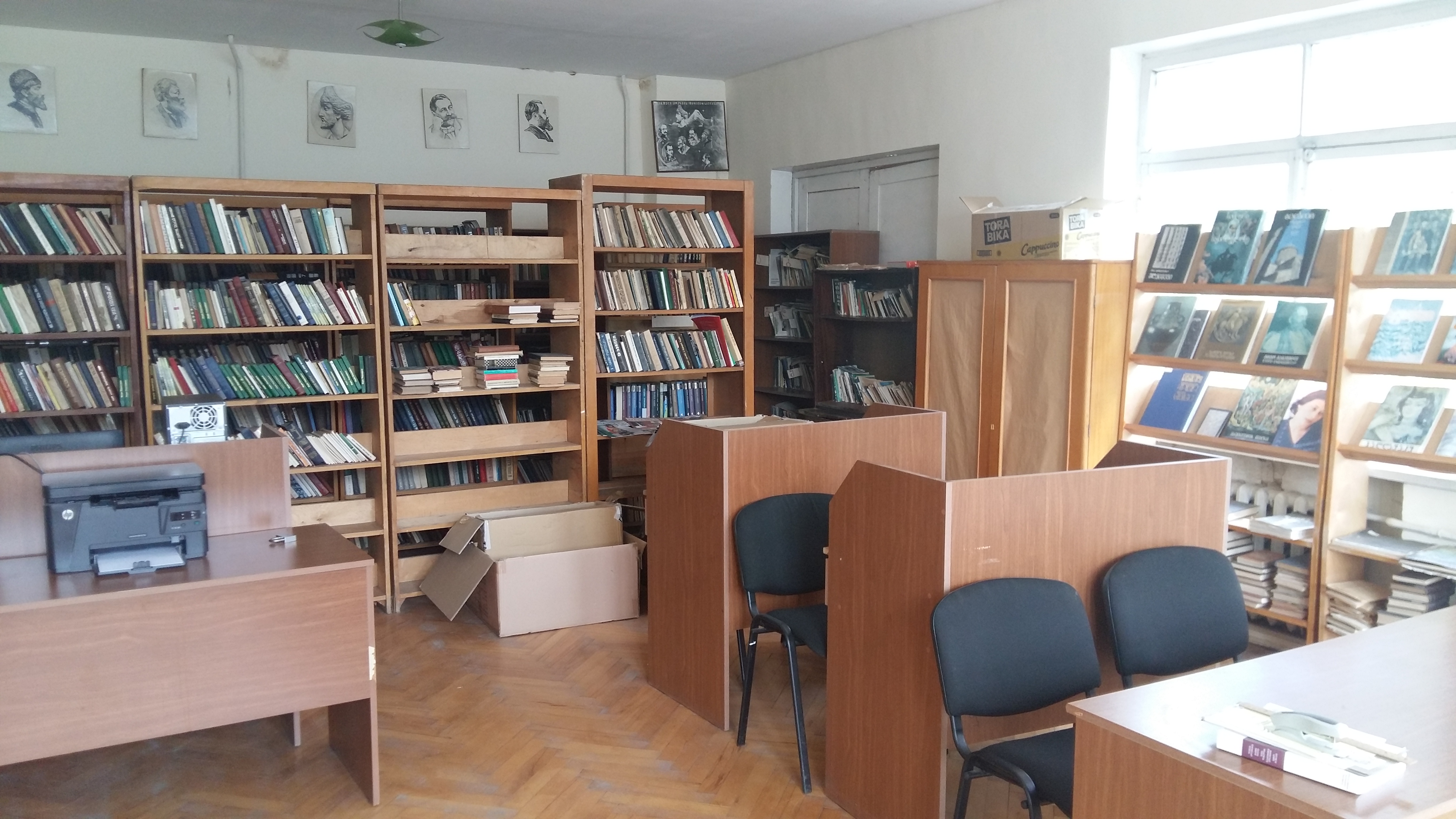
Unfortunately, Nana was out of town while I was in Pankisi, but her sister Darejan was filling in for her while she was away. The library is a single room on the building’s second floor, which is otherwise abandoned. The collection, which is mostly in Georgian with some Russian books as well, is shelved according to the author’s surname, in the order of the Georgian alphabet. There’s also a computer with a sporadic internet connection. The collection is clearly aging. Apart from a few newer looking books in large format, it appears that there hasn’t been a budget for acquisitions since the fall of the USSR.
I brought along a book to donate, a sort of tribute to the library that keeps on fighting. It was a manual of horse care; I’d checked beforehand with my host that it would be appropriate and useful to the community. It’s in English, but it’s one of those DK editions with pictures on every page, so it works as an English vocabulary book as well. My Georgian is very, very basic, so I couldn’t tell Darejan how much I respect her sister’s work. The best I could say was “Me too librarian! I give to library book!”
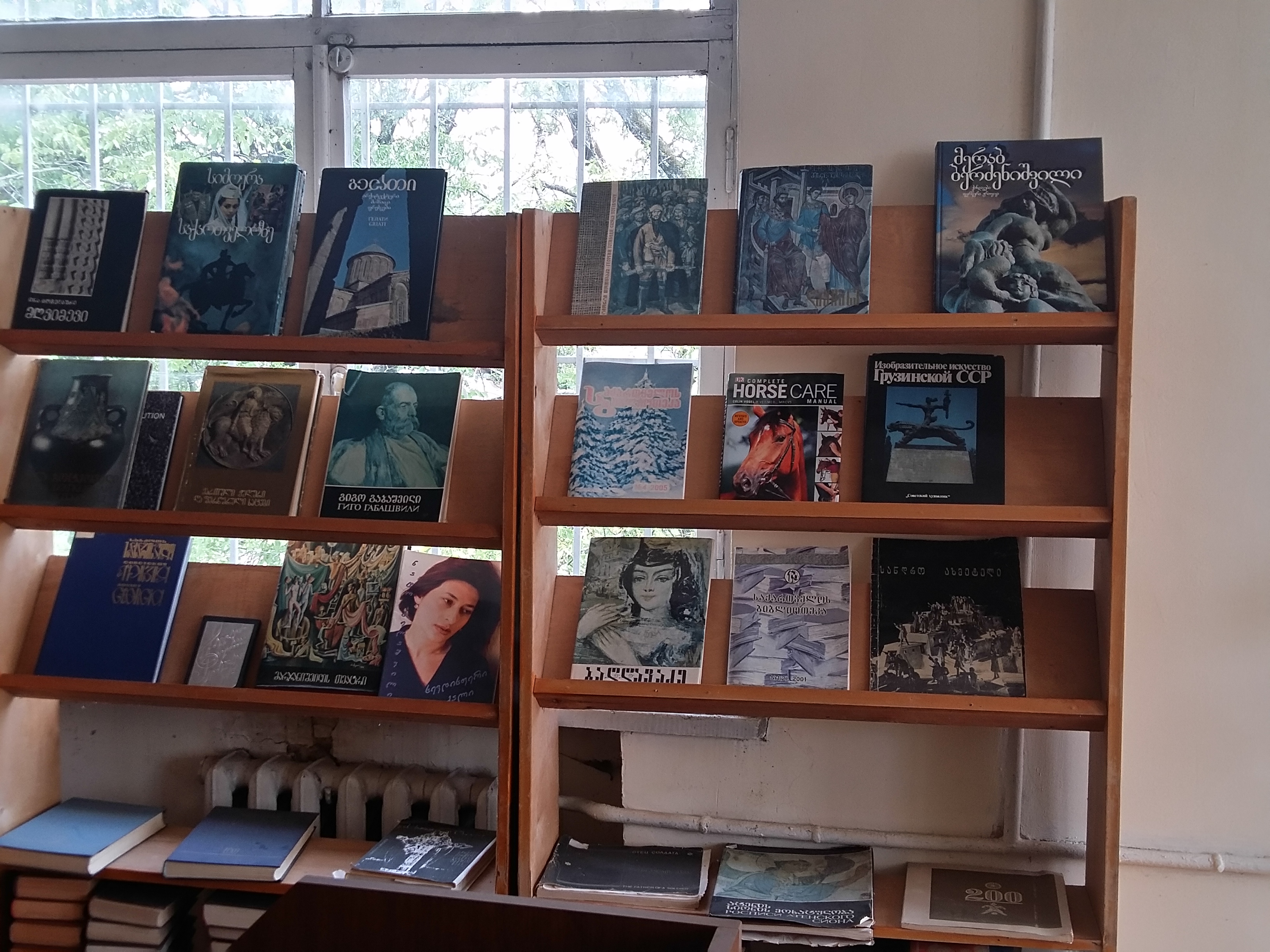
She insisted that I take a book in return. I managed to find a magazine that had two copies of the same issue. Thank you, Pankisi!
*The link to the article is currently down, and it’s not in the Wayback Machine. I’m hoping Chai Khana magazine manages to revive it.

 Kartvelian Adventures