Pankisi Idyll

The afternoon marshrutka went as far as Akhmeta, where I hired a taxi to take me to the village of Jokolo in the Pankisi Valley. Although Pankisi had a very rough start to the twenty-first century, it’s now a beautiful and largely undiscovered place for rural tourism. The inhabitants of the valley are Kists, a mainly Muslim minority in Georgia who speak a dialect of Chechen.
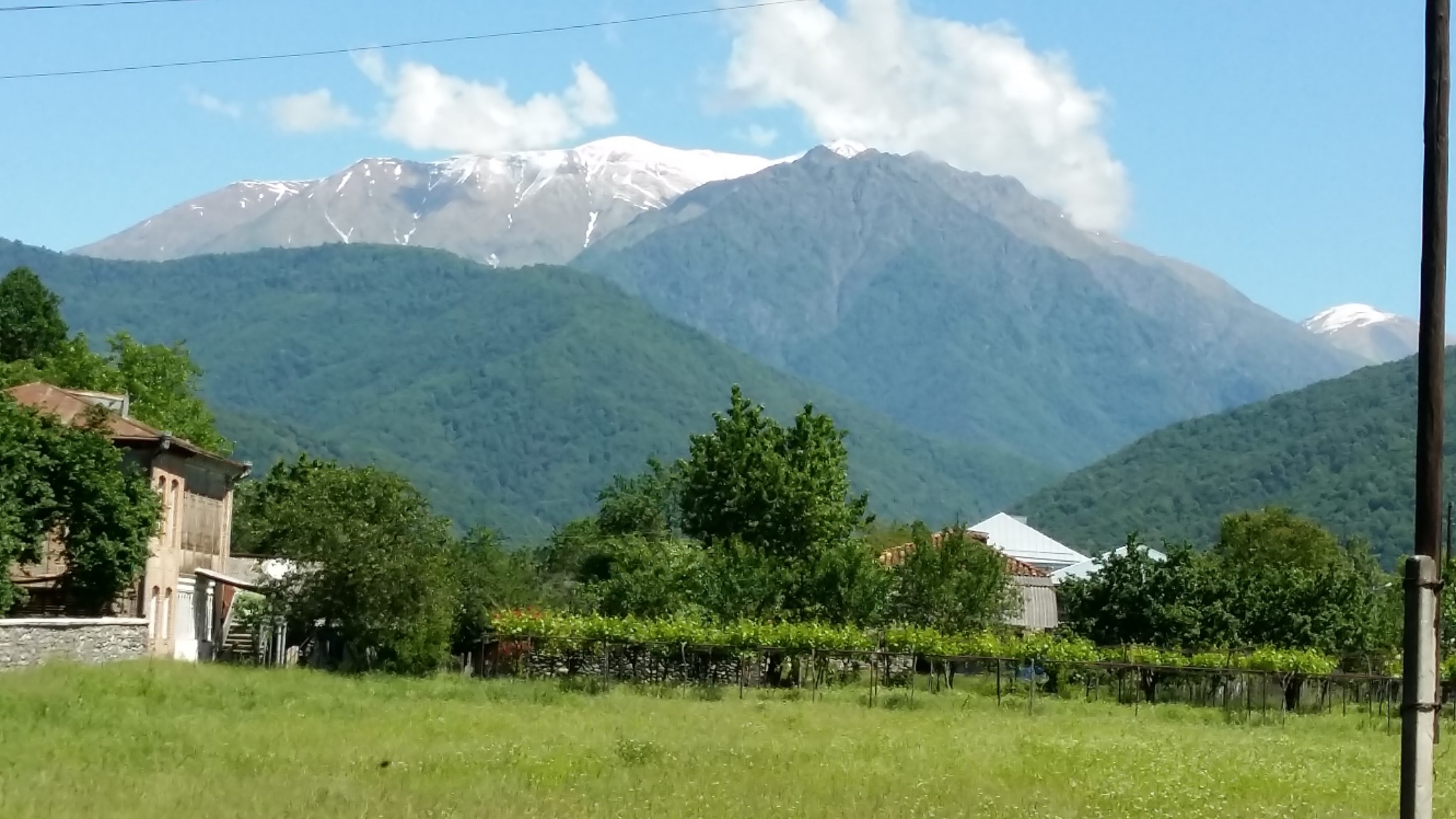
View of a house and its yard, with snow-capped mountains behind it.
Looking up the Pankisi Valley from a side street of Jokolo.
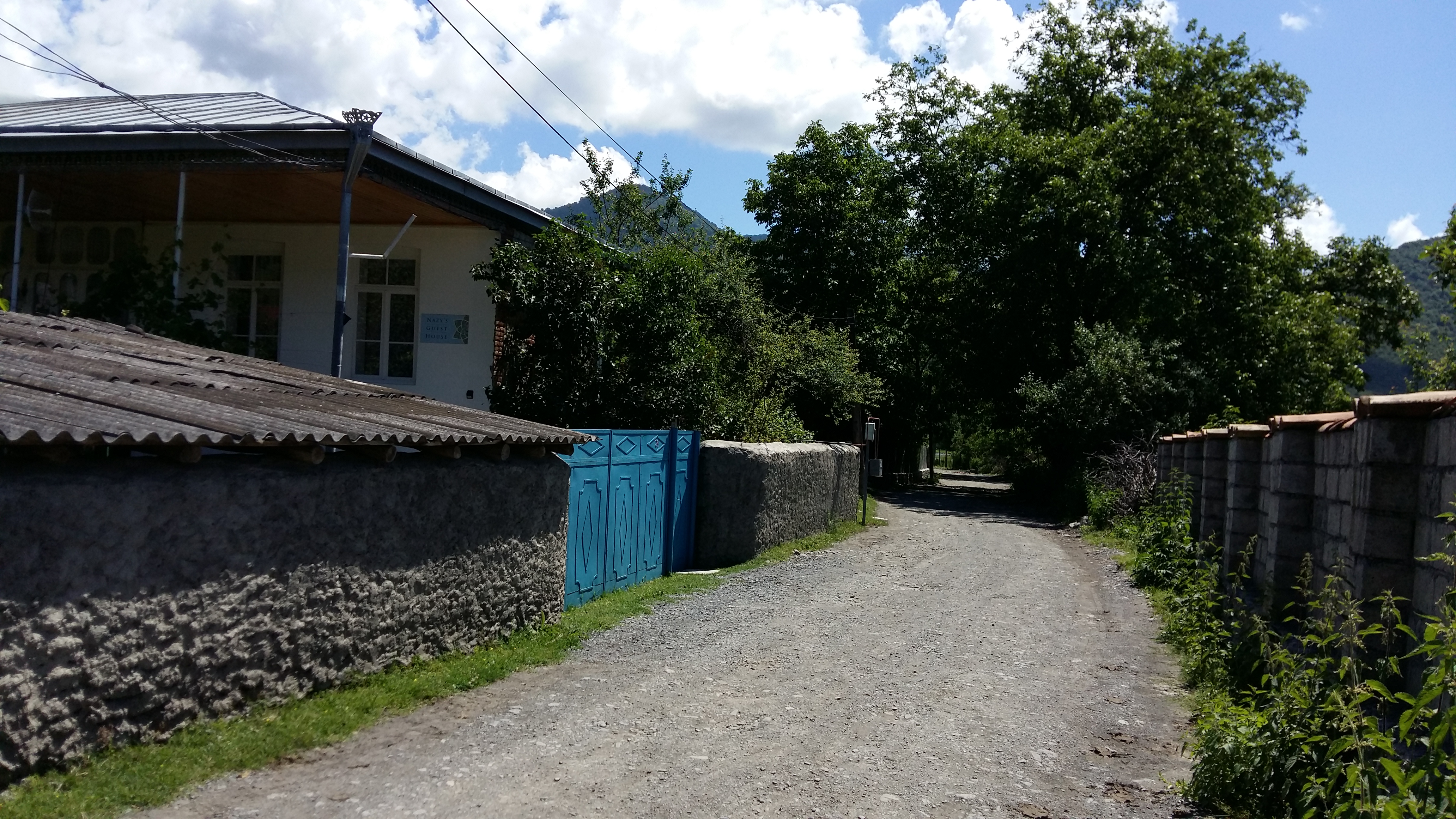
A dirt road with walls on either side, one of which has a metal gate. Behind the gate, a house is visible.
This gate leads to Nazy’s Guest House, which won a tourism award last year.
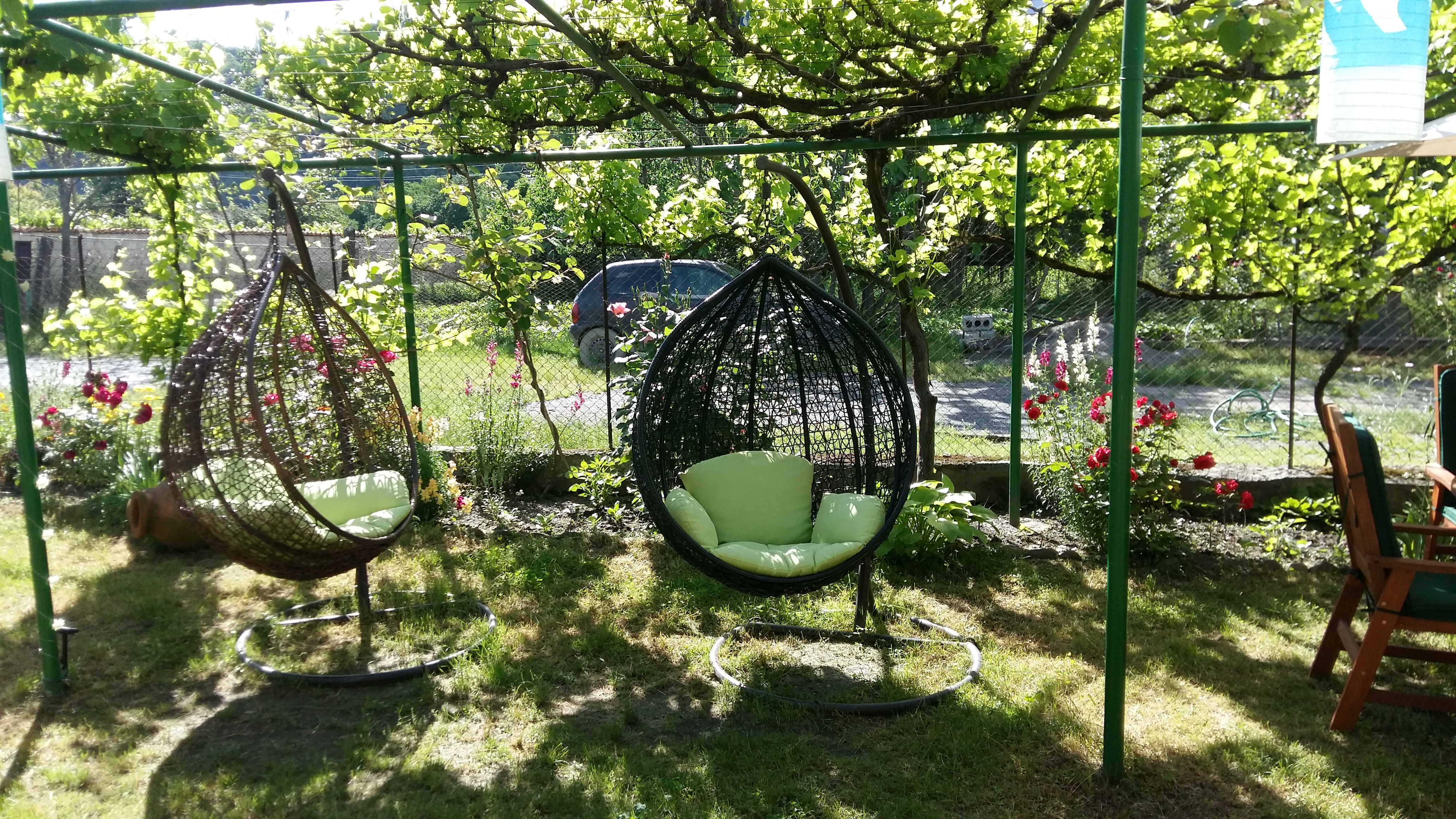
Basket swings hanging from a grape arbour in a sunny garden.
Nazy’s garden, where turtle doves coo in the evening.

That night, I feasted on meaty kharcho soup, kaldeet (curds, butter and corn flour) with galana (boiled dough balls), cauliflower in a piquant sauce, and fresh tomatoes and cucumbers.

The next morning, I went out on a tour of the neighbourhood, organized with the help of my hostess, Nazy. My guide and translator was Nika–or Nick, as he calls himself in English–a local teenager who was given the day off school for the occasion.
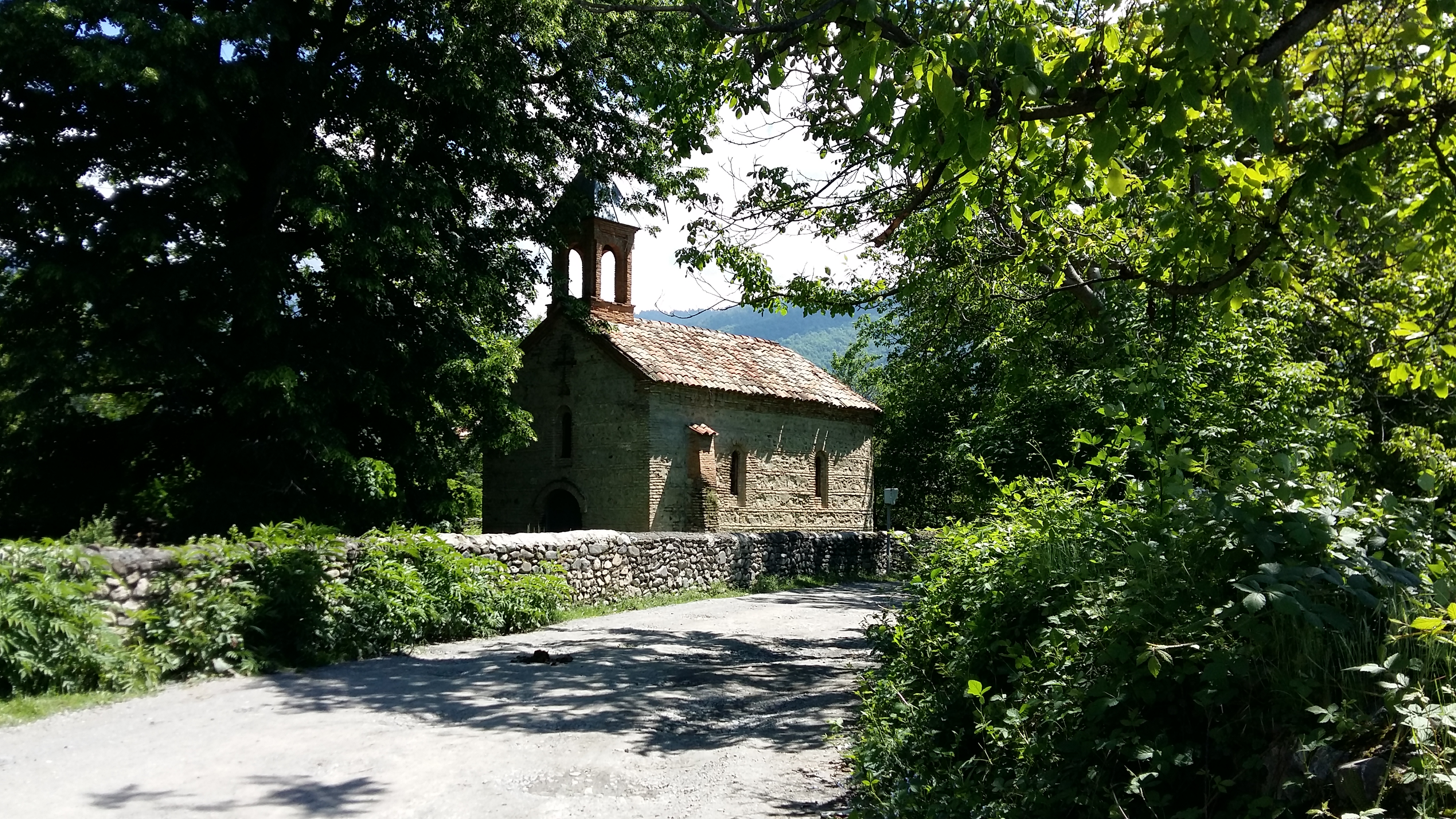
Small stone church.
Our first stop was this church, built by Russian authorities in the nineteenth century. Before the Russian Revolution, it served as the village schoolhouse.
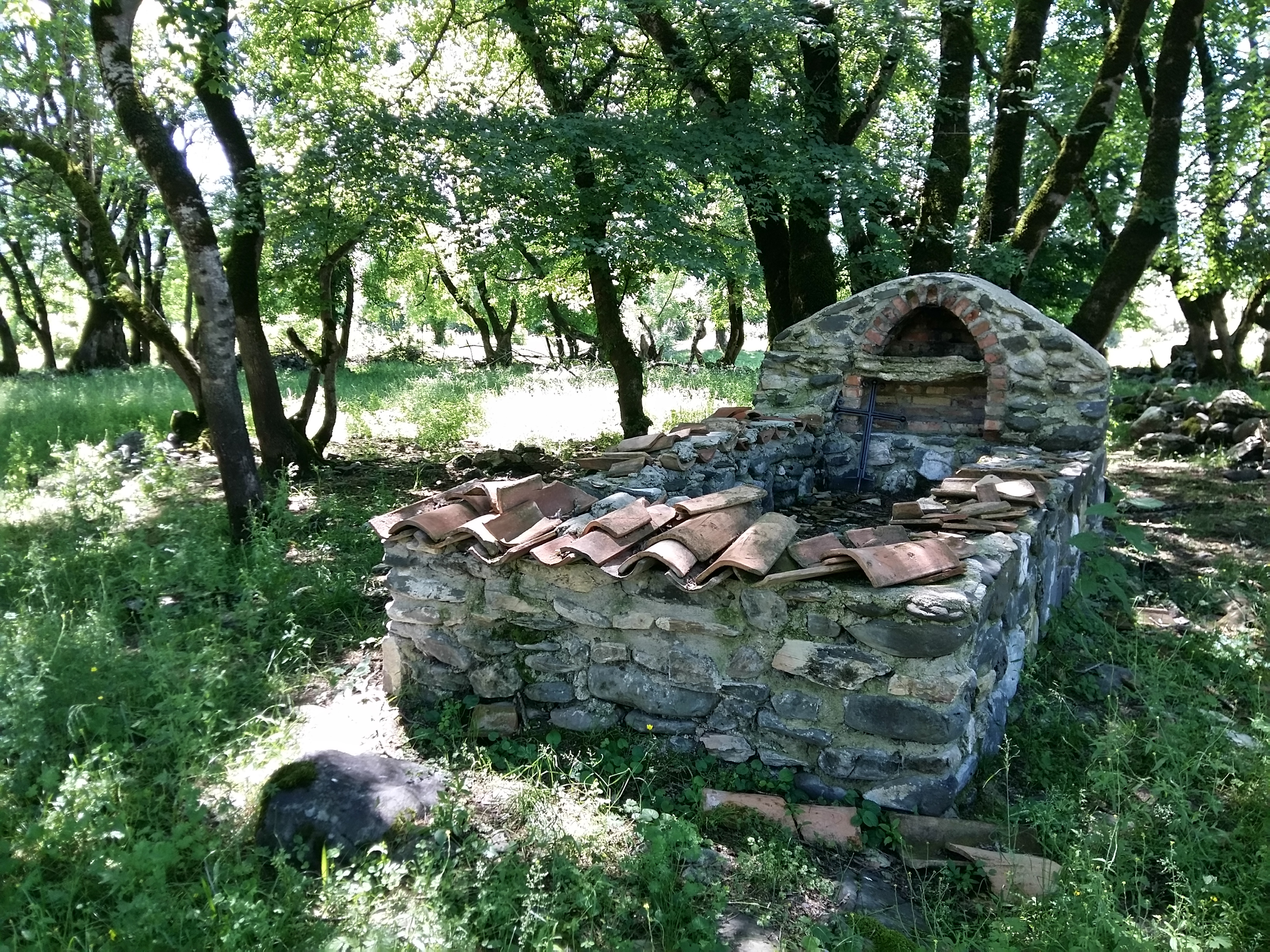
Low rectangular stone structure in a grove of trees.
This structure is also a small Christian shrine. I’m told that in former times, the local Christians and Muslims used to gather in this grove at Easter to light candles and drink vodka together. Nowadays, the custom has died out and the grove is mainly shady pasturage for the village’s free range cattle.
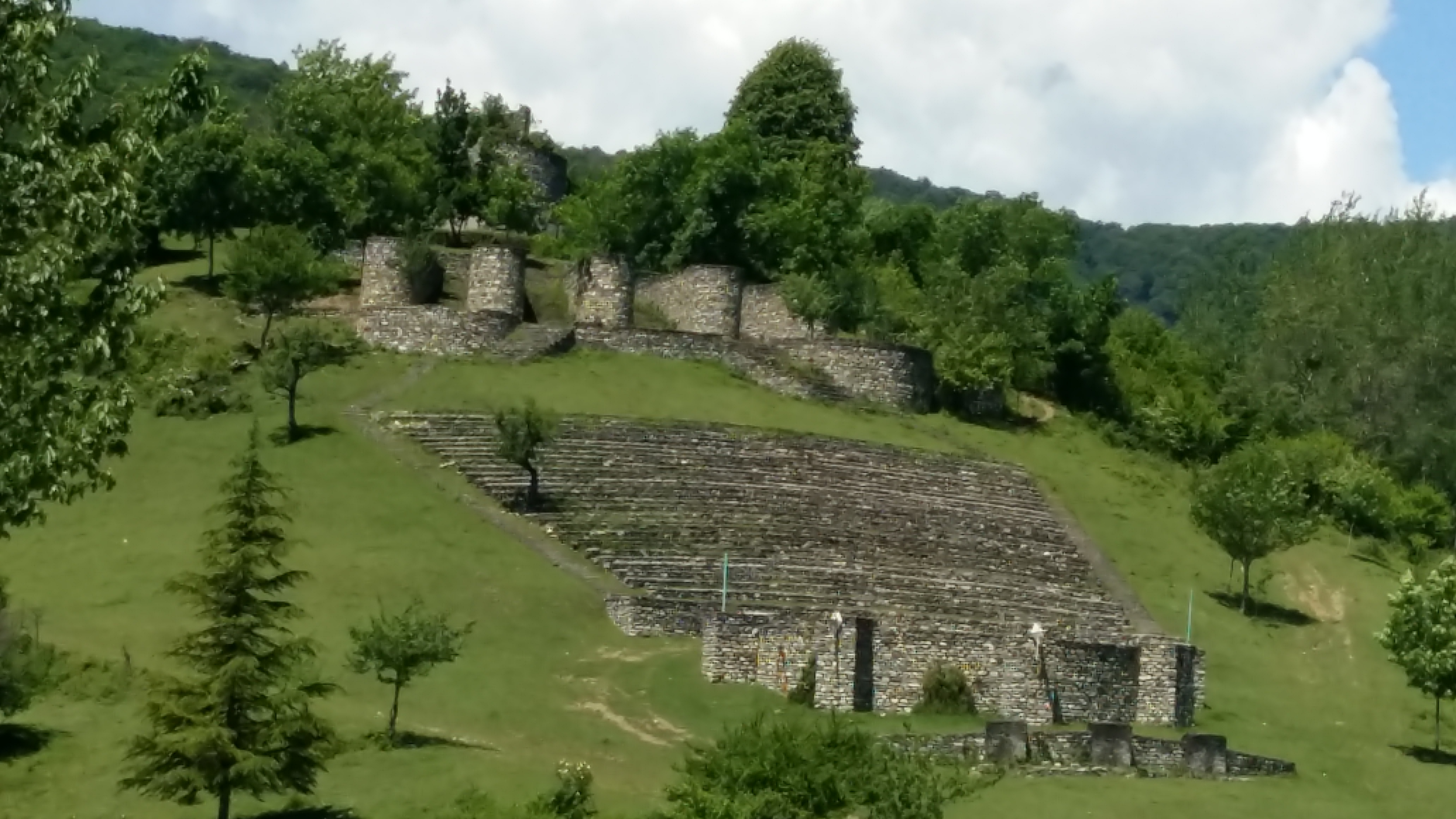
Image of a stone amphitheatre with castle-like bastions on a hillside.
Above the village of Duisi, there’s an amphitheatre built in the 1950s as a war memorial. Every May 9, on Victory Against Fascism Day, it comes alive with flags and ceremonies, singers and dancers.
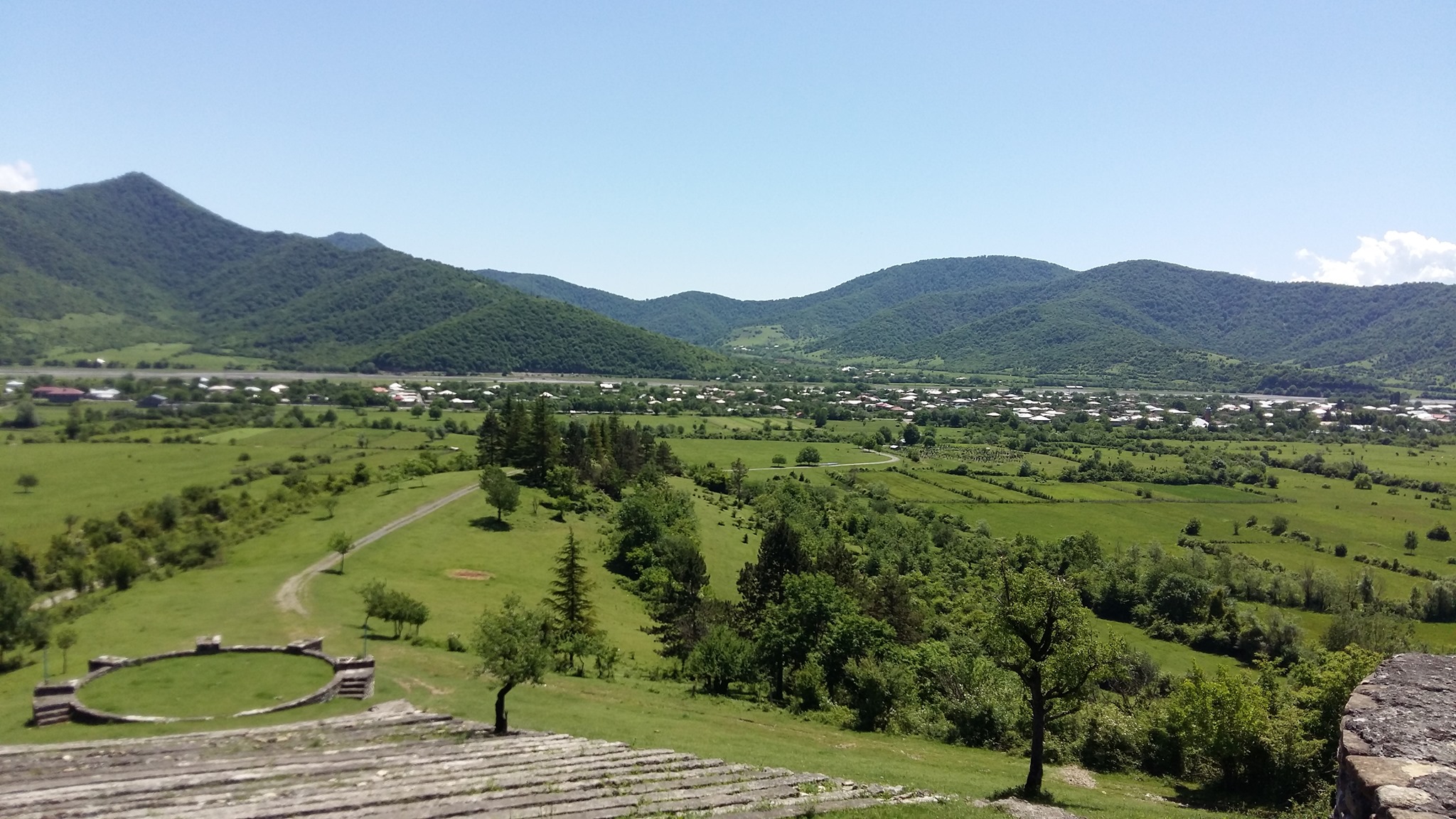
View of pastures, with a village and forested mountains in the distance.
The view of Duisi from the cenotaph at the top is magnificent.
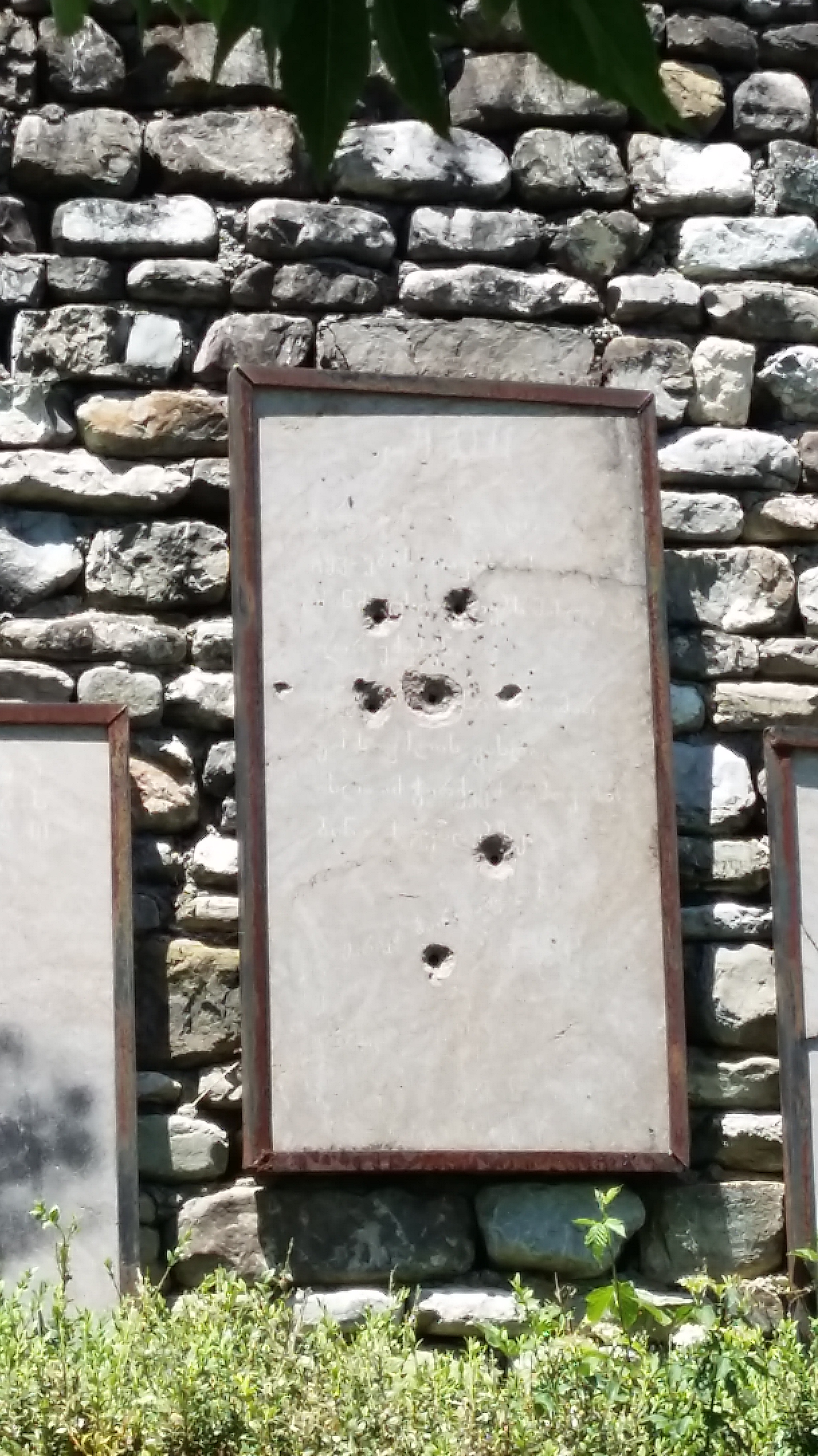
Concrete plaque with bullet holes in it.
The names on the plaques at the top of the memorial are fading, but you can see that each of the small villages in this valley lost a dozen men or more in World War Two. There’s also some evidence of Pankisi’s chequered history.
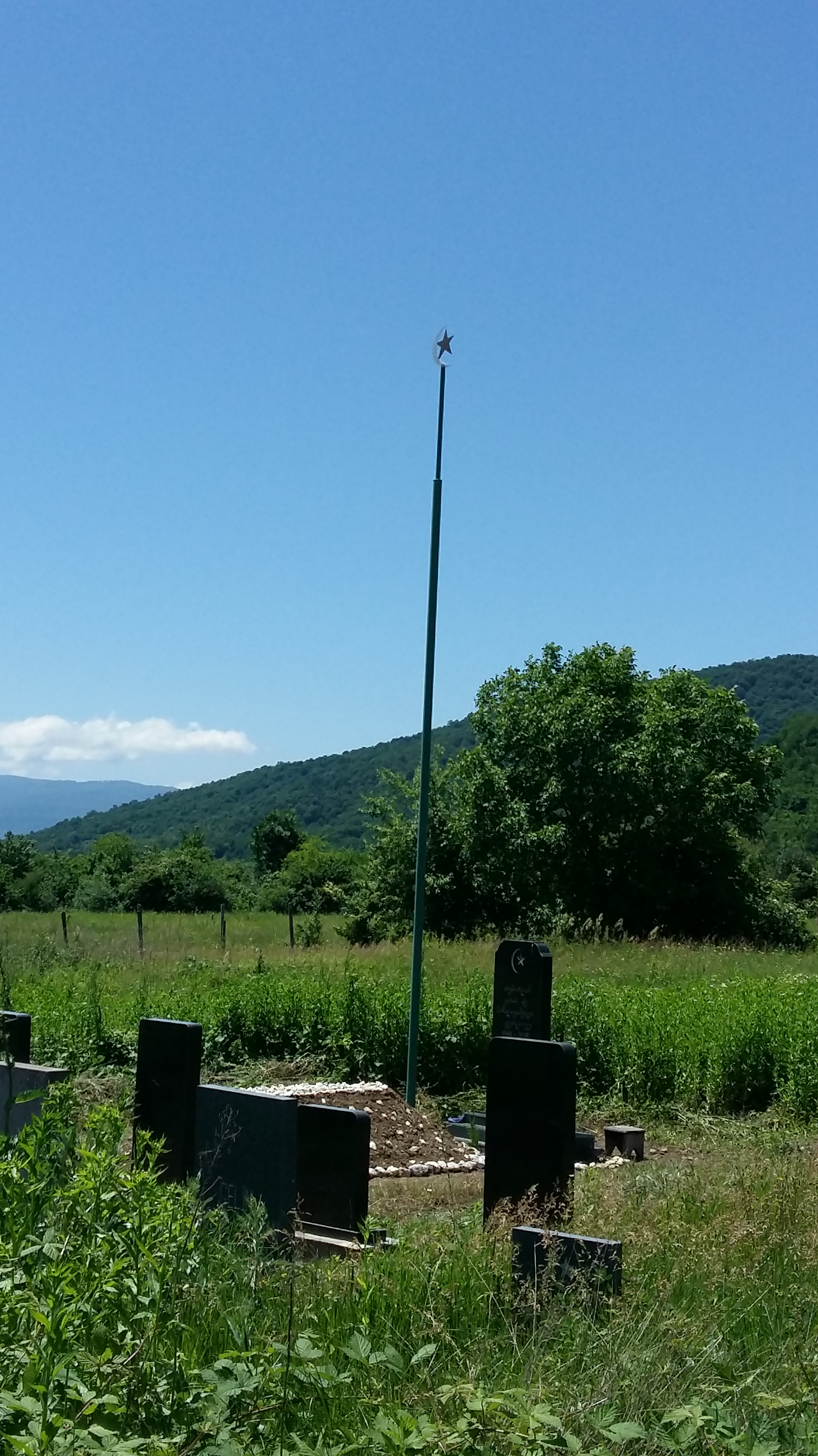
Image of a grave with a flagpole topped by a crescent moon and star.
On the way back down we passed the local cemetery and the grave of Temirlan Machalikashvili, a local 19 year-old shot on questionable grounds by security forces in 2017. My guide Nick got quiet for a while. Temirlan was his neighbour.

Then Nick took me to his house in Duisi. In the front yard, he had recently built a coop for his chickens. Chicken keeping is a challenge in the valley. Some weeks before, a goshawk had attacked his chicks, killing some of them. One pullet was still recovering from injuries and he was nursing it back to health.

I met Nick’s mom and tried a local specialty: non-alcoholic rose hip kombucha. This sweet and fizzy drink is apparently the product of a new startup business in town.
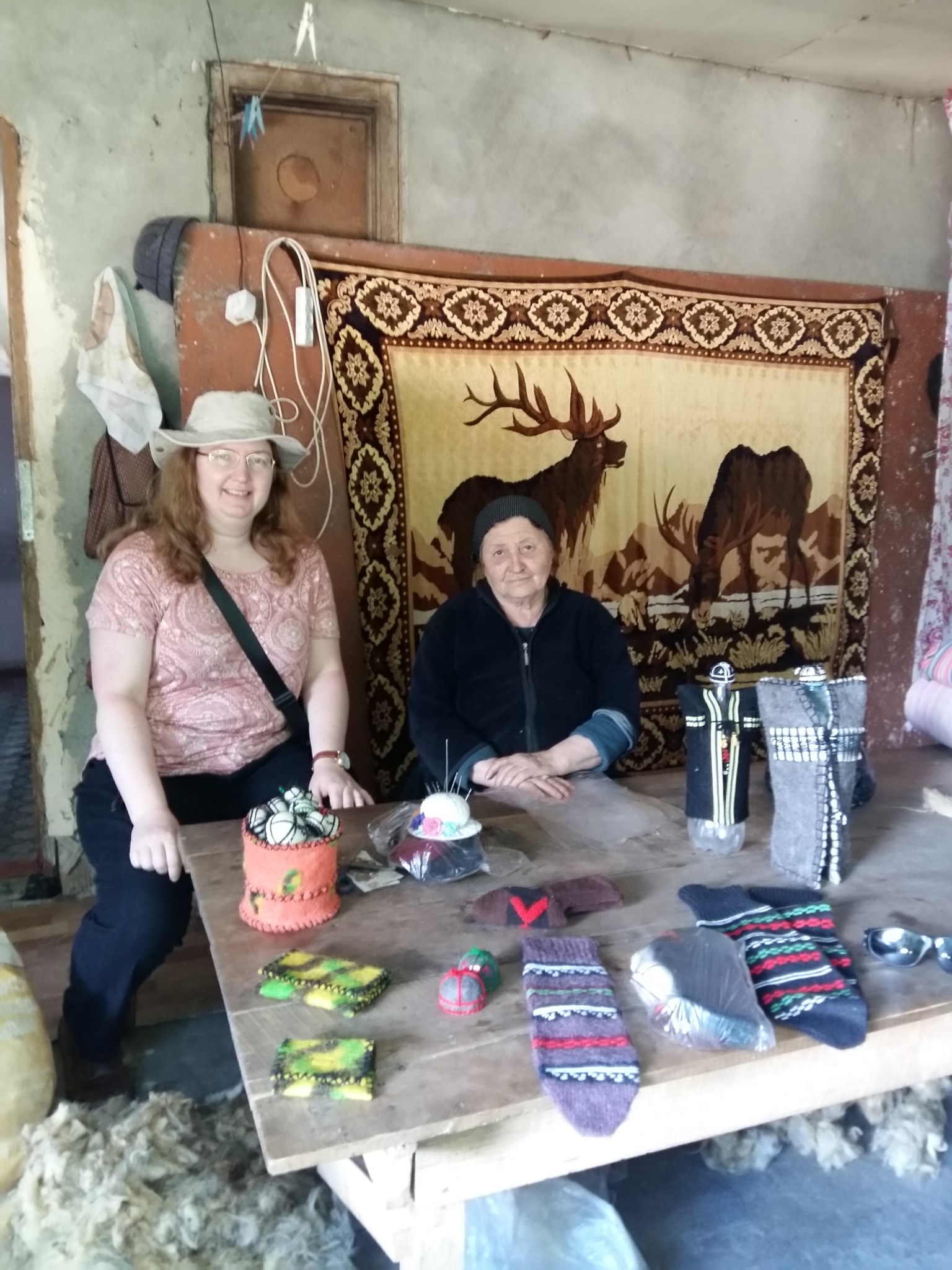
Two women behind a table with wool and felt souvenirs on it.
We rounded out the tour with a visit to Zizi, a local craftswoman who makes felt and sews souvenirs from it. She was sorting wool on her front porch when we arrived. In the lower left corner, you can see the pile of mats and imperfections she’d pulled out of the good wool. I bought some hand knitted slippers from her.

After that, Nick brought me back to the guesthouse in Jokolo. These tours are a great idea. They let the local young people, who have historically been isolated from the outside world, meet travellers from all over the globe. At the same time, they give us travellers an intimate peek into life in Pankisi. My guide Nick spoke excellent English and translated everything like a real pro–even the side conversations he had with neighbours and schoolmates he met in the street. He’s turning seventeen this summer and wants to get into an American college that teaches graphic design. Here’s hoping he makes it.

Leave a comment